
Ecommerce AI Personalization Engine for Higher Conversion
An ecommerce operator looking for an app development company that can improve conversion and personalization.
Buyer context
The business problem was measurable before the first model call
Why it mattered
Recommendation quality directly affected conversion rate, average order value, and customer lifetime value, making personalization a revenue system rather than a UX feature.
The buyer needed a measurable conversion system, not a cosmetic recommendation widget. The product had to connect behavior, catalog data, experiments, and fast storefront rendering.
Product walkthrough
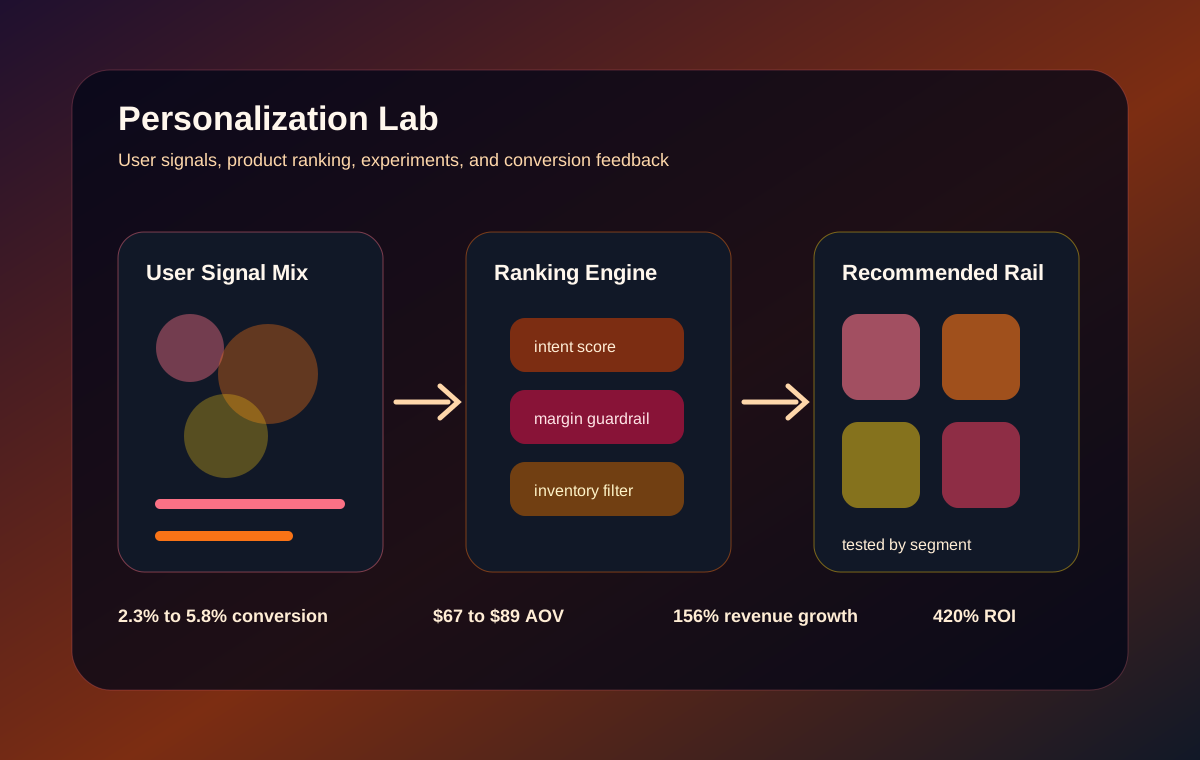
Personalization has to respect intent, margin, inventory, and speed
Ranking inputs
Homepage rail
Recommendation slot 1 optimizes a different buyer moment and needs its own readout.
Product detail upsell
Recommendation slot 2 optimizes a different buyer moment and needs its own readout.
Cart recovery
Recommendation slot 3 optimizes a different buyer moment and needs its own readout.
Architecture
The useful part is the system around the model
Behavior event stream
Views, carts, purchases, and recency signals informed user-level recommendation choices.
Business constraints
Margin, inventory, merchandising, and promotion rules shaped what the AI could recommend.
Experiment layer
A/B testing separated actual personalization lift from seasonality and campaign noise.
Fast storefront path
Recommendations needed to load quickly enough to protect conversion gains.
Technical implementation
Real-time user behavior tracking, machine learning models for preference prediction, A/B testing framework, and performance optimization for sub-second response times.
Before / after
The page has to teach the decision, not just announce the win
Before
The retailer was struggling with low conversion rates because generic product recommendations did not match individual user preferences.
Build
We built a real-time AI personalization engine that analyzes user behavior, purchase history, and browsing patterns to deliver personalized product recommendations.
After
Conversion rate increased from 2.3% to 5.8%, average order value rose from $67 to $89, and customer lifetime value extended from 12 to 18 months, driving 156% revenue growth.
How we would build it today
A buyer can use this as a practical project brief
Start with event quality, product catalog structure, and merchandising constraints.
Design recommendation slots around business goals: conversion, AOV, retention, or discovery.
Use holdout testing and segment-level reporting before expanding automation.
Make the ranking layer observable so merchandisers understand why products appear.
Buyer checklist
Decision framework
When this kind of build is the right move
Prioritize personalization when
The catalog is large and users need different paths to the right product.
Prioritize search when
Most buyers know exactly what they want before browsing.
Measure success by
Conversion rate, AOV, repeat purchase, product discovery, and latency.
Caveats
The lift depended on enough traffic and purchase history to support meaningful personalization.
A/B testing was needed to separate AI impact from seasonal or campaign effects.
The recommendation engine had to stay fast enough not to hurt storefront performance.
Next steps
If this looks like your problem, start with the closest intent path
What should a ecommerce team look for before starting this kind of AI project?
Start with a measurable workflow, clean access to the relevant data, a clear escalation or review path, and agreement on the success metric. TensorBlue uses those inputs to decide whether ecommerce AI personalization should be a prototype, a production workflow, or a phased rollout.
How much of the result came from AI versus product engineering?
The AI model was only one layer. The outcome came from data preparation, workflow design, product UX, integration, monitoring, and adoption planning around the model. That is why the case study focuses on the full system, not only the model choice.
Can this be rebuilt for a different company without copying the same implementation?
Yes, but the workflow, integrations, controls, and measurement plan need to be redesigned around the new business. The reusable part is the delivery pattern; the exact implementation should stay specific to the buyer's data, users, and operational constraints.
What is the main caveat behind the published result?
The result assumes sufficient traffic, useful product data, and experiment discipline to prove the personalization lift.