
Healthcare AI Diagnosis Assistant for Clinical Documentation
A healthcare founder or operator evaluating a healthcare app development company for clinical AI workflows.
Buyer context
The business problem was measurable before the first model call
Why it mattered
Documentation overhead was reducing patient time and increasing clinician burnout, which made adoption and clinical workflow fit as important as model accuracy.
The buyer needed healthcare-grade UX, compliance-aware data handling, mobile workflow design, and clinician trust, not a generic chatbot.
Product walkthrough
Clinical AI succeeds when the review experience earns trust
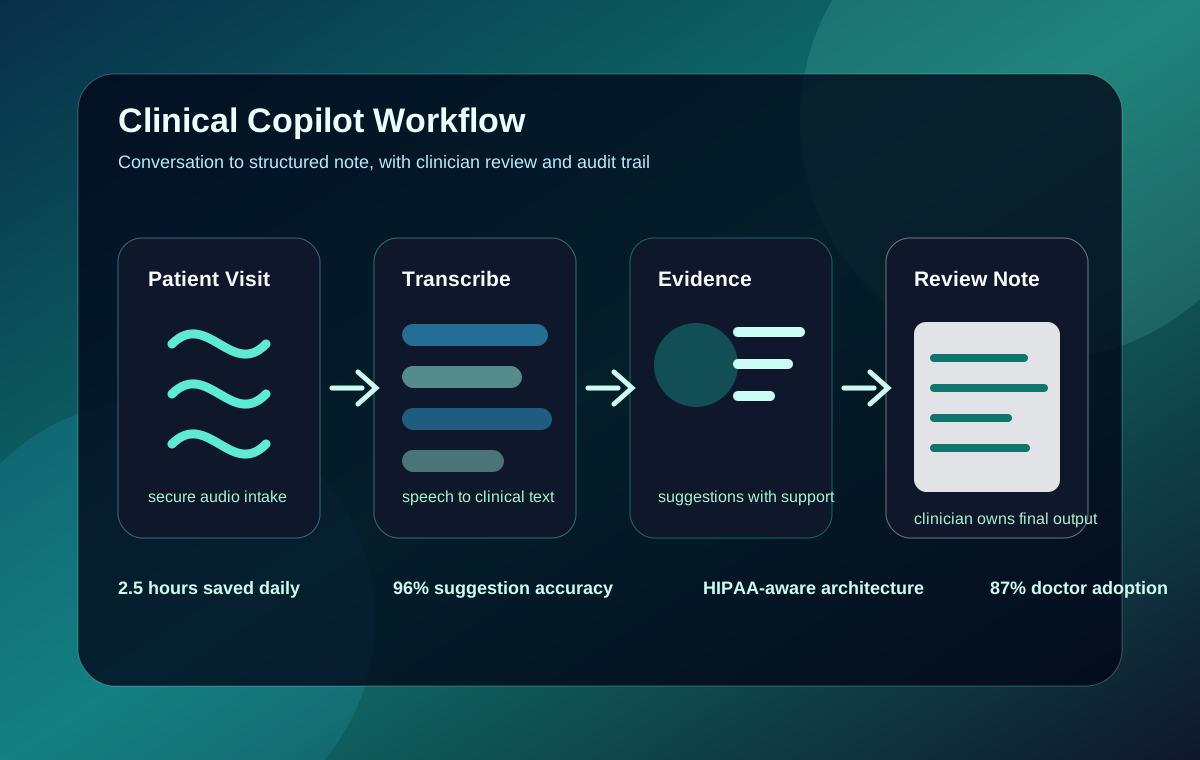
Audio capture
Secure clinical conversation intake
Transcript
Speaker-aware clinical note material
Suggestion
Diagnosis-support output with evidence
Clinician sign-off
Doctor reviews and owns final note
Clinical note surface
Architecture
The useful part is the system around the model
Compliance-aware data path
Storage, access control, and audit needs were part of the product design from the start.
Audio to clinical text
The workflow converted conversations into structured material that clinicians could review.
Evidence support
Suggestions needed supporting context, uncertainty handling, and clinician-owned decisions.
Adoption surface
The interface optimized for daily clinical speed, not demo-only model output.
Technical implementation
Real-time speech-to-text using OpenAI Whisper, HIPAA-compliant data processing, integration with medical databases, and secure cloud deployment with end-to-end encryption.
Before / after
The page has to teach the decision, not just announce the win
Before
Doctors were spending 3+ hours daily on routine diagnosis documentation, reducing time with patients and increasing burnout.
Build
We developed a HIPAA-compliant AI assistant that transcribes doctor-patient conversations, analyzes symptoms, and suggests diagnoses with supporting medical literature.
After
Doctors now save 2.5 hours daily on documentation, allowing more time with patients. The AI achieves 96% accuracy in diagnosis suggestions and 87% of doctors have adopted the system.
How we would build it today
A buyer can use this as a practical project brief
Start with one clinical documentation flow rather than every specialty at once.
Design consent, retention, audit logging, and role-based access before UI polish.
Use a clinician review surface that explains evidence and uncertainty.
Track adoption, edits, time saved, and documentation quality after launch.
Buyer checklist
Decision framework
When this kind of build is the right move
Use mobile first when
Clinicians need the assistant during patient-facing work or rounds.
Use web first when
The workflow is mostly review, coding, supervision, or back-office processing.
Measure success by
Time saved, adoption, edit rate, documentation completeness, and escalation quality.
Caveats
Clinical users still reviewed and owned final documentation decisions.
HIPAA compliance required architecture, access control, logging, and process design beyond model selection.
The 96% accuracy metric applies to measured diagnosis-suggestion support in this workflow.
Next steps
If this looks like your problem, start with the closest intent path
What should a healthcare team look for before starting this kind of AI project?
Start with a measurable workflow, clean access to the relevant data, a clear escalation or review path, and agreement on the success metric. TensorBlue uses those inputs to decide whether healthcare app development should be a prototype, a production workflow, or a phased rollout.
How much of the result came from AI versus product engineering?
The AI model was only one layer. The outcome came from data preparation, workflow design, product UX, integration, monitoring, and adoption planning around the model. That is why the case study focuses on the full system, not only the model choice.
Can this be rebuilt for a different company without copying the same implementation?
Yes, but the workflow, integrations, controls, and measurement plan need to be redesigned around the new business. The reusable part is the delivery pattern; the exact implementation should stay specific to the buyer's data, users, and operational constraints.
What is the main caveat behind the published result?
The result assumes the assistant supported clinicians and did not replace clinical judgment or required human review.