
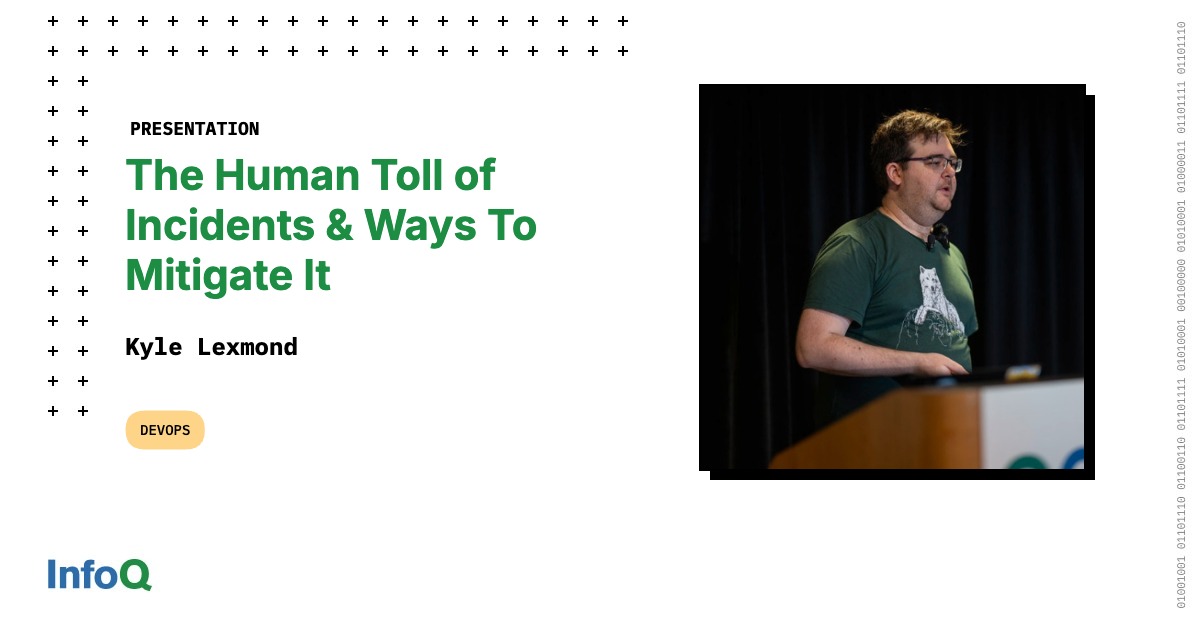
Presentation: The Human Toll of Incidents & Ways To Mitigate It
Kyle Lexmond discusses the human side of major system failures. He shares psychological insights and architectural tactics for surviving high-pressure incident rooms.
Kyle Lexmond discusses the human side of major system failures. He shares psychological insights and architectural tactics for surviving high-pressure incident rooms.
What Happened
InfoQ Homepage Presentations The Human Toll of Incidents & Ways To Mitigate It
The Human Toll of Incidents & Ways To Mitigate It
Kyle Lexmond explains how to handle the high-pressure environment of severe production outages. He discusses the critical distinction between mitigation and root-cause resolution, sharing personal experiences from harrowing incident rooms. He shares valuable operational strategies on overcoming cognitive overload, establishing blameless cultures, and optimizing systems for faster recovery.
Kyle Lexmond is an almost-SWE who learned about Site Reliability Engineering in passing conversation during university, changing the course of his career. Having worked at big names (Twitter, Amazon, Facebook) and small (CBSA, Kik), he enjoys working on building optimized and efficient systems that break less often after he touches them.
Software is changing the world. QCon San Francisco empowers software development by facilitating the spread of knowledge and innovation in the developer community. A practitioner-driven conference, QCon is designed for technical team leads, architects, engineering directors, and project managers who influence innovation in their tea
This topic matters because it signals where AI product delivery, engineering execution, and technical strategy are moving next.
Tags
TensorBlue AI Desk
AI systems, software engineering, and product strategy