
TENSORBLUE
MLOps
Build reliable machine learning systems with automated training pipelines, model deployment, monitoring, feature stores, and model governance.
DATACOLLECTPROCESSFEATURES
MODELTRAINVALIDATEREGISTER
PRODUCTIONDEPLOYMONITORIMPROVE

FROM DATA
TO REAL-WORLD IMPACT
TO REAL-WORLD IMPACT
WHY MLOPS
Move machine learning from experiments to production
MLOps connects data pipelines, model training, deployment, and observability so teams can ship reliable AI systems faster and scale them with confidence.
Reusable ML pipelines
Monitoring + governance
Lower risk, better ROI
WORKFLOW
A practical MLOps lifecycle
From experimentation to production machine learning.
Data pipelines
Ingest, clean, label, and validate data.
Training
Run experiments and optimize model performance.
Registry
Version models, artifacts, and approvals.
Deployment
Release to staging, production, batch, or real-time endpoints.
Monitoring
Track drift, accuracy, latency, and trigger retraining.
BUILDPIPELINES
FEATURES
INFRASTRUCTURE
FEATURES
INFRASTRUCTURE
DEPLOYMODELS
REGISTRY
AUTOMATION
REGISTRY
AUTOMATION

MONITORPERFORMANCE
DRIFT
REAL-WORLD IMPACT
DRIFT
REAL-WORLD IMPACT
SCALEGOVERNANCE
RELIABILITY
ITERATION
RELIABILITY
ITERATION
MLOPS DELIVERY SCOPE
MLOps engineering for production AI teams
Clear delivery scope, platform outputs, and operational support so teams can scale machine learning with confidence.
Included
- ✓ML pipeline design
- ✓Feature pipeline integration
- ✓Model registry + deployment workflows
- ✓Governance and access controls
- ✓Monitoring and drift alerts
- ✓Launch and iteration support
USE CASESWhere MLOps creates
Where MLOps creates
the most impact

Computer vision
Deploy inspection, detection, and image recognition models with monitoring.

NLP and generative AI
Operationalize LLM apps, RAG pipelines, and prompt evaluation workflows.

Recommendation systems
Manage ranking models, feature pipelines, and online inference.

Forecasting and anomaly detection
Scale predictive models for demand planning, fraud, and operations.
CAPABILITIESWhat a modern MLOps
What a modern MLOps
stack should include
 01
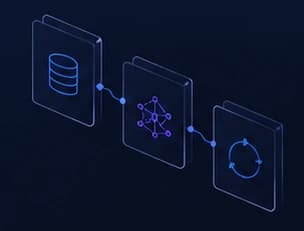
ML pipeline automation
Automate data prep, training, validation, and retraining workflows.
 02
Model registry + versioning
Track models, datasets, experiments, and approvals across environments.
 03
Model deployment + serving
Ship batch, real-time, and edge inference with rollback support.
 04
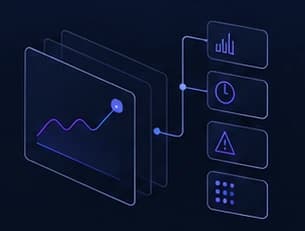
Monitoring + drift detection
Watch performance, latency, data drift, and model drift in production.
OPERATING MODELWhat changes when
What changes when
MLOps is built correctly
Fragmented ML workflow
Manual handoffs between data science and engineering
Slow model deployment and limited reproducibility
Poor visibility into drift, failures, and model performance
Production-ready MLOps platform
Automated ML pipelines and repeatable releases
Faster deployment with model registry and CI/CD
Continuous monitoring, governance, and retraining
“Reliable AI needs reliable operations.
“Great ML products are monitored, not just trained.